Customize It: Part 1

I’ve been knee deep in a sea of HTML and CSS lately, trying to learn the ins and outs. After making practice pages on my computer, I thought that I would try to create my own blogger theme from scratch. After looking into it, it seems completely unnecessary. You can edit anything on the page by adding CSS in the Template Designer. In this post I’ll give the steps, in the next post I’ll show all the CSS changes I made on my test blog.

1. Pick the design that is the closest to what you want.
By default, you start out with the first option in the “simple” category. If you like this one, then great! There are a good number of options to pick from, but I admit they look mostly the same. Choose the design that is the closest to what you want. Try not to focus too much on the colors or images, since you can change most of those in the customization options offered in the template designer. I picked the picture window template.

2. Customize using options in Blogger
Choose the Background, Widths, and Layout for your blog. Finally, use the options available under the advanced tab to change colors and fonts. Even though I made a lot of changes, there were still some things I didn’t like. For example, I wanted the header to have a picture instead of a solid color background. It’s possible to change most anything with CSS, as long as you know the name of what you want to change.

3. Get the CSS from your blog
This step can be skipped if you are familiar with CSS. Apply any changes you’ve made, view your blog and right-click on the page. Select “View Page Sorce”, select all text and save it in a text editor (such as Notepad or jEdit, but NOT MS Word). The text will have a mix of markup and code, but you’re looking for just CSS. Scroll until you see this:

/*-----------------------------------------------
Blogger Template Style
Name: Picture Window
Designer: Josh Peterson
URL: www.noaesthetic.com
----------------------------------------------- */

That’s where the template style starts. If you picked a different template, it will say something different but look basically the same. Delete everything above this. As you scroll down, you will see a lot of named variables next:


<Variable name="body.font" description="Font" type="font"
default="normal normal 15px Arial, Tahoma, Helvetica, FreeSans, sans-serif"/>

Group>


Group>
 
You don’t need those either. The next part is the actual CSS. It looks like this:
/* Content
----------------------------------------------- */
body {
font: normal normal 15px Cambria;
color: #114499;
}
html body .region-inner {
min-width: 0;
max-width: 100%;
width: auto;
}
You can tell it’s CSS by the lines with only “}” on them. Keep scrolling down until the CSS ends and you see a bunch of listed divs. They look like this:

<div class='body-fauxcolumns'>
<div class='fauxcolumn-outer body-fauxcolumn-outer'>
<div class='cap-top'>
<div class='cap-left'>div>
<div class='cap-right'>div>
div>
<div class='fauxborder-left'>
<div class='fauxborder-right'>div>
<div class='fauxcolumn-inner'>
div>
 Everything from here on out you don’t need. 
4. Inspect your blog 
Go to the browser’s menu, select “developer tools” and then “inspect”. The page should go dark, and as you roll your mouse across the page, it will highlight the different elements. Since I want to change the header background, I rolled over the header until the entire thing was selected. 

Be certain to get the entire section you want to change highlighted. Elements are layered over one another, so selecting the wrong one is easy. when you have it highlighted, it will show a text box on top with its name. In my case, the name is “div#header-inner”.
5. Search the text file
Use “find” to search for the element you want to change. Copy the name and everything inside the brackets, as well as the brackets themselves. If more than one name is mentioned before the brackets, then you would be better off typing up the CSS instead of copying it. Multiple names means the rules are affecting multiple sections of your blog. Unless you want to change all of those sections, you’ll have to write up the CSS yourself. 
6. Add the CSS to your blog
In the template designer, under the advanced option, scroll down and click the “Add CSS” option. You’ll see a textbox to the right, which is where you add your CSS. Either paste or write your new rules here. You should see the page changing in the window below. Because I wanted to change the background of the header to match the background of the blog, this is what I put in:
#header-inner{
} 

 The link references the same location where the background is stored. Any picture will have to be referenced in this way, but only use pictures that are yours or free for public use. 

Repeat the last three steps to change anything that you want on your blog. I’ll give a lot of examples of what you can change in the next post.
 

How Not to Suck at Street Racing Games

I would have picked out a particular series, but I think the basic principles apply to all of them. Street racing games, often referred to as Arcade Racers, are high octane thrill rides taking place in city streets. The responsible ones will warn you that street racing is both illegal and deadly, then go on to spend hours glorifying it. But anyways! Here are some tips for playing these game successfully.

1. Forget Physics
A common frustration that gamers face regarding arcade racers is the independent interpretations of physics. Though differing slightly in each game, removing the rules of physics makes for a better race. You will be going faster than you should, turning faster than you should, and overall defying logic and reason while taking little to no damage. It’s freeing, really.

2. Never Use the Brakes
This is an overstatement, because occasionally you may want to tap them, in order to slide around a corner. Because of the lack of physics, you don’t have to be concerned that you are turning an SUV while going 90. It may seem like the right choice to slow down to a reasonable speed while threading between cars on the digital interstate, swerving from lane to lane as you race toward that glowing yellow smoke, but resist. No guts, no glory.

3. Use Walls to Turn
This sounds counter-intuitive, and it’s not the best way to race, but it can work in a pinch. The way that the cars take damage and accelerate allow you to gun it on a straight away, turn hard but wide, hit the wall, accelerate and stay in the lead. A better strategy is to use a rival car to turn. They are going to (probably) turn responsibly, and they won’t slow you down as much as a wall. Turn tighter than a rival car, sideswipe them to knock your car into the right direction, and speed ahead. It works very often.

4. Crash Early
This is an inconsistent rule, but it’s worth a try. In my experience, older games will have a better success rate. If you flounder at the beginning, running into things and generally sucking, it can slow down the AI of the other cars. This is true in other racing games like SSX as well. Sandbag at the beginning, then race as solidly as you can till the end. I came across this strategy accidentally, as I would be racing so perfectly that the AI seemed impossible to beat. If I happened to crash early on the same course, I found myself winning by a wide margin. Maybe this is coincidence, but it works for me.

5. Don’t Spend Your Money
You’re going to have a lot of it, and a lot of options. Usually you start with a crap car and slowly race against better cars, and therefore require better cars. Regardless of the specific set-up, try your best to avoid buying any cars or upgrading your car until you absolutely must. I have often poured money into a car only to realize that I will need to buy something completely different to succeed in the next race.

…Did I Mention Forget Physics?
I can’t stress enough that you need to boldly try anything that seems vaguely possible, no matter how improbable. Smash through glass walls to take shortcuts through buildings, try pieces of concrete that almost resemble ramps, drive anywhere it will let you drive. Cut through parking lots, parks, and, in Midnight Club 3 Dub Edition, run into trees. You would think this would slow you down, but instead this is the secret to success. The most important rule in street racing is to go fast and win.

Ruth Heller

Ruth Heller is an award winning designer and artist. I can’t say I’ve read any of her books, but she had a series called “designs for coloring”, and the two geometrics entries are favorites of mine. Essentially, they are grown-up coloring books. I first discovered them quite young, and bought a 50 pack of super tip crayola markers to color them. I have recently bought one of the geometric books again, to color again but also display in my house in some sort of artful way that has yet to be decided.

I found out today, after a quick Google search, that she was married and widowed twice, paid her way though college by being a secretary, and pursued art as a lifelong dream. Her first art job wasn’t until she was close to her 40s, and her first book published a few years later. The ones I enjoy so much weren’t published until she was in her late 60s.

Post originally published in a previous blog on 6/12/11

Elder Scrolls Online

I’m not saying they are the best games, but there’s a nicotinian quality to Elder Scrolls. Maybe it’s because you can play for 20 hours without realizing you haven’t done anything for the main story line. Maybe its the inherent random feel of the environment, glitches and all. Maybe it’s the inner hoarder, stuffing cabinets and dressers with every imaginable variation of every item. Whatever it is, Elder Scrolls has it. I purposely stopped playing Skyrim because… well, Its hard to imagine why now, but I know it was the right thing to do. I still saw my family and all that, but I did bring it to Thanksgiving. And maybe Christmas. Anywho, I say all that to say this:

There will be an Elder Scrolls Online. I don’t know when it comes out, I don’t know what it’s about, I don’t know what I will have to pay to play it or how good or bad it will be. And I don’t care to know. Because it doesn’t matter. I don’t care if its not a logically viable decision in hindsight or even foresight, because this is how I feel about the announcement:

Re-entering the wizarding world

After reading The Hunger Games, I thought that maybe I was romanticizing how good Harry Potter was. Its been about a decade since I read the first couple books, so I decided to re-read them. Today while working out I read the first line of the first book:

“Mr. and Mrs. Dursley, of number four Privet Drive, were proud to say that they were perfectly normal, thank you very much.”

The first line confirmed two things: its better than Hunger Games and I’m already excited.

HTML & CSS

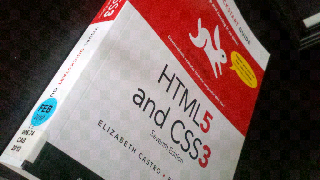
A solid chunk of my library books have been from the 000 section. I learned basic Ruby last year, with the intent to learn Ruby on Rails. However, I had no knowledge of PHP or MySQL, and my HTML and CSS knowledge was rudimentary and outdated.
After a home remodeling intermission, I am back to programming. There is a better selection of HTML 5 and CSS 3 books now, which is a plus. I’m reading as I create my own site completely from scratch, written in jEdit.
The book pictured here isn’t my favorite; a bit too wordy for me. The information within is very complete, and offers helpful bits of code (outside of HTML) that allow creation of more professional and complete websites.

Melted Crayon Juice

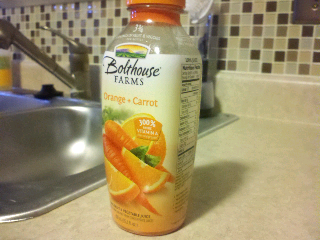
I buy Bolthouse Juice all the time, because washing a juicer sucks. The green juice is our house favorite, but its fun to try different varieties from time to time. The one I tried today was called Orange + Carrot.
I know that it may seem silly to say this, but I always felt that I knew what the color orange tasked like. Like an orange, the fruit. But I was wrong. An orange tastes like an orange. A carrot tastes like a carrot. Somehow together, in this juice, they taste like the color orange.  I mean that in a great way; the way you dream a melted orange crayon would taste in magical childhood land (if you ever dreamed such things). And I don’t think it’s just because the two foods in it are orange. Adding a sweet potato would certainly ruin it.

Hunger Games Notes

There are few things I do because of peer pressure, but reading is one of them. A friend of mine read the first Hunger Games book and insisted that I read the trilogy along with her. I borrowed her book and blazed through in just a few hours. In fact, I think it took me about 12 hours to read the whole trilogy. I don’t share this to brag, only to confess that I read them quick, and my impressions are reflective of that.

I will NOT mention any spoilers. Overall I felt that the basic framework of the story was great, but the execution fell short. It’s not a bad trilogy, and it is for pre-teens after all. I will admit that I felt, while reading, that it was originally intended to be a trilogy for adults (especially considering the dark themes) and it was presented for teens because the writing was at more of a teen level. Maybe a comparison to another book would help me explain: The Harry Potter series is for kids but… it’s not the quality of the writing that makes it so.

The books raises some questions about human rights, society, government, and love. I think that any authored story will have some statements that the literature makes, by virtue of how it is written. In the case of the Hunger Games, I found that some of the issues that drove action in the story were not brought to a meaningful or full conclusion. Some of the statements the books made, in my opinion, were inconclusive or lacking. Sometimes, there were elements of the story that were necessary for the reader’s comprehension, but seemed out of place with the flow of the story. These tent pole moments were necessary to keep the story aloft, but were distracting.

I think that ends all the negative things I have to say about it. On the positive side, the framework of the story is interesting and thought provoking enough to be worth a read. Though some moments are truly tragic and heartbreaking, I think it is the situation that provokes these emotions. I’m not sure the writing was insightful and touching on its own accord. Even though the story is told in first person, I think the main character does not become as dynamic as I would have liked. Ok that was the last negative thing. But, these are impressions made during a quick read through. I may go back, read them more carefully, and write a real review.

Meta Review

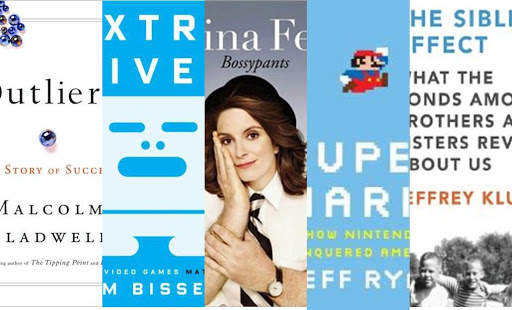
These are the books I have read in roughly the last week:

Outliers: The Story of Success by Malcolm Gladwell
Extra Lives: Why Video Games Matter by Tom Bissell
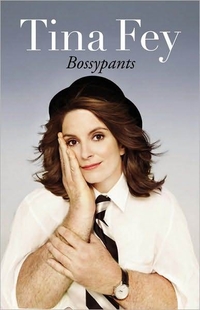
Bossypants by Tina Fey
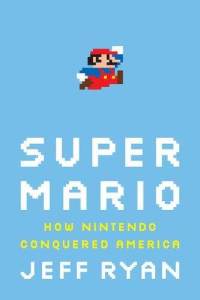
Super Mario: How Nintendo Conquered America by Jeff Ryan
The Sibling Effect by Jeffery Kluger

Having read them so closely together, I will pit them against one another in this meta-review. These books don’t necessarily have anything to do with one another, though at times they do overlap. I often find that no matter what I read, if I read them in a short span of time I can’t help to notice connections between them. The Outliers book was a grounding factor in explaining not only the success of an individual like Tina Fey, but also companies such as Nintendo. The Sibling Effect, which discusses how birth order and your siblings help shape your identity, is another unifying factor across the different books and the viewpoints of the people that wrote them.

Simply stated, siblings are important. There were some fascinating facts, but overall it talked more about what cannot be said objectively since there are so many subjective experiences in any individuals life, and among any group of siblings. Any section that particularly applies to the reader’s own life experience is understandably more interesting than those that don’t, Kluger has a family history that covers most of the bases. His passion for the topic is widely founded in his own experiences, but the field of research on sibling relationships is strangely sparse and only recently gaining more attention. In any case, its fun to read and hypothesize about yourself and those you know, and how they fit into their familial roles. These family roles are the making of us, and can explain the choices we make. In Tina Fey’s case, her identity as the youngest, much cherished youngest child resulted in an outpouring of love and support that gave her the foundation of confidence so crucial to her success.

Bossypants was exactly what I expected, and yet, it made me realize what it wasn’t. What I expected was a humorous story about a humor professional. At times it was very personally detailed, but that also highlighted an absence of that same intimacy near the end of the book. Of course, that is a writer’s prerogative, especially when writing their own autobiography. Maybe there is not yet enough perspective distance for her to comment on her more recent life in the way that she comments on her adolescence, or maybe her adult life is public enough that she feels she does not have to comment. In any case, one thing that seemed very intriguing in a perhaps unintentional way is how she spoke of her time impersonating Sarah Palin on SNL after she had left the show and started 30 Rock. In the most literal way that it could possibly happen, she had found her place. She earlier laments that she does not look like anyone else, and where other actresses could wear a wig and convincingly portray others, she had never been capable of doing so. This excluded her from certain opportunities, and seemed like a disadvantage when she was younger. As she portrayed Palin, it was that distinctiveness that eventually gave her an unparalleled advantage.

Distinctiveness leading to an unparalleled advantage is the basic premise of Outliers. Gladwell digs into stories of success to show that they are extraordinary, but also explainable. It’s not merely a mystical lottery of  fate that allows people to achieve success: it is often a mix of coincidence, opportunity, and very hard work. Some find that work endlessly enjoyable, as with Bill Gates time spent programming as a young man, or a lawyer who takes cases no one wants, only to gain the experience that years later allows him to be at the head of the field later. (The hard work and experience needed, as a side note, happens to average ten thousand hours. So, you know… plan accordingly) The responses to the opportunities presented is often what opens the pathways to success. In many cases, what could have been viewed as a disadvantage or an obstacle was turned into a unique advantage. This was true for Tina Fey, and it was true for Nintendo of America as well.

In Super Mario, we learn that the start of Nintendo of America was precarious to say the least. The wealthy owner of Nintendo wanted an America outlet during the booming arcade period. He shipped a bunch of arcade machines along with his daughter and son-in-law over to America, where the machines failed to sell. Instead of swallowing the loss, the son-in-law decided cheaply recycle the machines by swapping the motherboards with a new game. That game was created by an unlikely nonconformist by the name of Shigeru Miyamoto. The Donkey Kong game Miyamoto created ignited the success of not just Nintendo of America, but Nintendo at large and subsequently created their flagship personality, Mario. There are also critical missteps by Nintendo, such as their reluctance to adopt discs and pushing for online game features, but never considering online multi-player. Even in overwhelming success stories, there are still some overwhelming failures. These failures mesh into the identity of the success, and are an important part of the story.

It was the same failure among success that I did not suspect to find in Extra Lives. I think that any and every gamer could, from their own perspective, write this same book. That is not meant to lessen the book itself, but instead endorse its premise. Bissell mentions that games gave him and extra life during a hardship he faced, but does not reveal the full details until later in the book. I felt that the book itself slowed in pace right before this revelation, almost reluctant to tell the whole story. But, as he shows in his chronicles of other game makers and in his praise for their work, games are a complex, personal reflection of the people who make them and the people that play them. The games are a mirror for their success, their pride, their failures and their regrets.

Outliers was defiantly my favorite of the five. I expected The Sibling Effect to be similar and found myself somewhat disappointed. I did not expect Super Mario to be similar and it was: full of information and told in a engaging style. Bossypants was easily the most entertaining of all the books, but Extra Lives proved the most personal. I would recommend all of them.

Portal 2

A few thoughts about Portal 2:

I never played the first Portal, but never heard anything bad about it. Portal is often referenced in discussions about gaming as the good example to model from. After deciding to get Blockbuster’s game pass, I scanned my local store for a game to rent while I wait for fall releases. I saw Portal 2 on the shelf and decided it was time.

I was a fool to wait so long. The premise of the game allows them to legitimize a very linear story, but that story is exceptionally crafted. Though you can listen to the voices narrating to you, the scope and history of the story can be discovered in posters and the decaying lobbies. There is a crafty indirect way that you are told the story in the beginning, and my only disappointment is that it seems a little too direct as the story progresses, but even that can be legitimized within the framework of the game.

Because there are few voices in the game, and you travel through different parts of the facility that is now abandoned, it can feel very lonely. I moved at a pretty good clip, but the loneliness of the quieter parts of the game pressured me to look for walkthroughs, hoping I would meet with some companionship again. That’s a kind of sissy thing to say, but its true nonetheless. The mood in the game is very effective, and very lonely.

Edit note: I wrote this a while ago but didn’t publish it, so the date is inaccurate. This was from last year.